

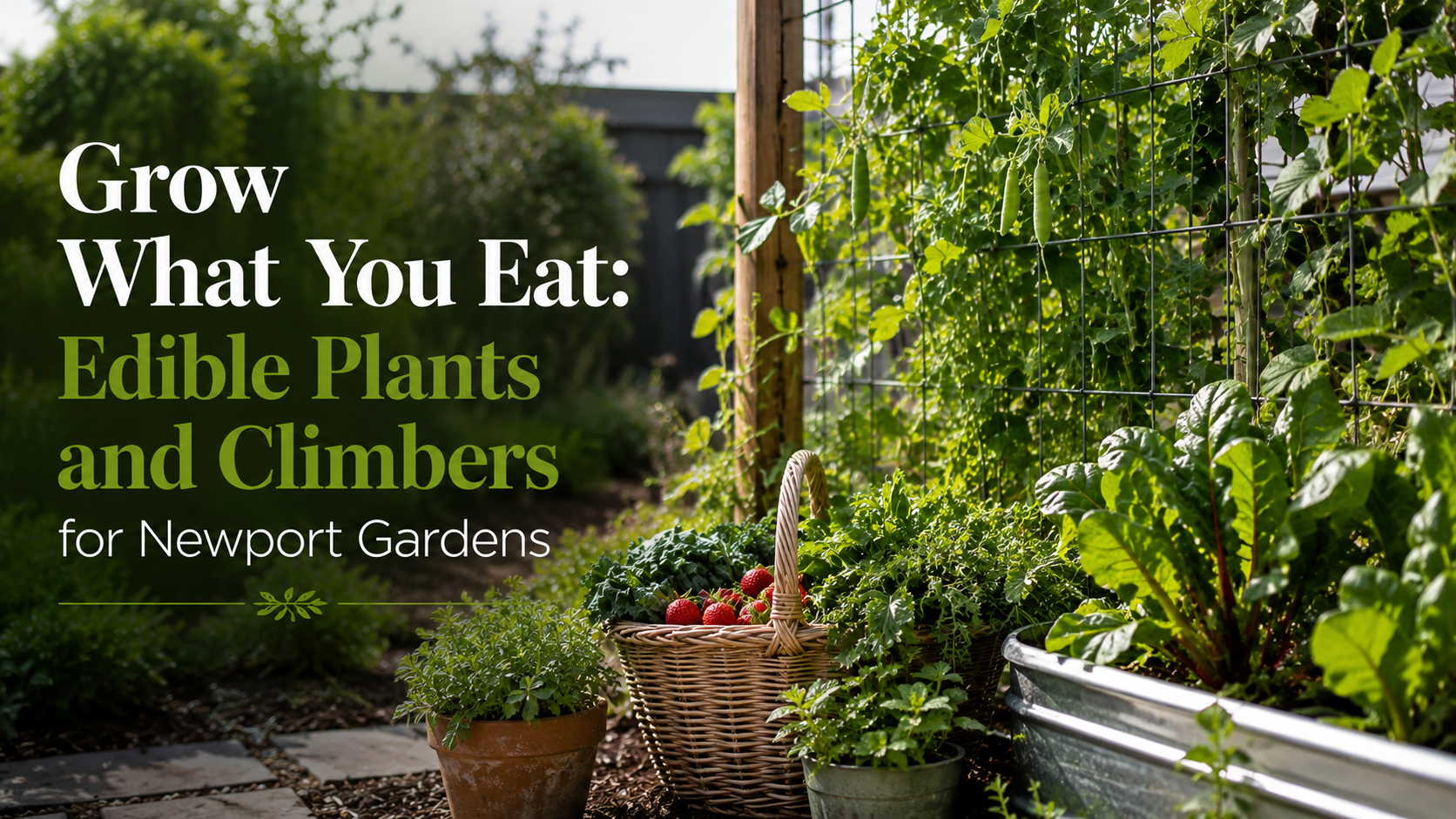
There is something deeply satisfying about stepping into your own garden and harvesting something to eat. Whether it is a handful of native herbs to flavour a dish, berries to add to breakfast, or leafy greens grown alongside ornamental species, edible gardening connects us to our food in a way that supermarket shopping never can. For Newport residents, the opportunity to combine native edible plants Newport gardens can support with ornamental climbing species offers a practical, beautiful, and ecologically responsible approach to home growing.
Newport Native Nursery, located at Newport Lakes in Victoria, stocks a range of climber plants Newport gardeners have found invaluable, alongside native edible species that can be woven into existing garden beds or grown in containers on patios and balconies. With more than a decade of experience growing indigenous species, the nursery’s team understands which plants perform best in Newport’s coastal, wind-exposed conditions, and which ones reward you with something you can eat.
Native Edible Plants Worth Growing in Newport
Australia’s indigenous flora includes a remarkable number of edible species that have sustained Aboriginal communities for tens of thousands of years. Many of these same species are well-suited to suburban Melbourne gardens and are available through Newport Native Nursery.
Sambucus gaudichaudiana, the White Elderberry, is a native shrub whose berries have a long history of indigenous use. The plant produces clusters of small white flowers followed by pale, edible berries, and it grows readily in moist, sheltered garden positions. It’s a valuable dual-purpose plant — attractive as an ornamental and rewarding as a food-producing species.
Carpobrotus rossii (Pigface) is a native succulent ground cover whose magenta flowers give way to fleshy, edible fruits with a salty-sweet flavour. One of the most recognisable of all edible plants Newport residents can grow along coastal garden strips, Pigface is also extremely drought-tolerant, self-spreading, and effective at stabilising sandy or exposed soils.
Rubus parvifolius (Small-leaf Bramble) is the native equivalent of a raspberry-style bramble, producing small, sweet red berries in summer. It’s a sprawling ground cover that can be managed along a fence or trained up a simple structure, and its fruit is a genuine treat for both gardeners and local wildlife.
Mentha australis (River Mint) is a native mint species with smaller, more delicately flavoured leaves than its introduced cousins, and a pleasing sprawling habit that makes it ideal for moist garden borders, water features, and container planting. It is one of the most useful native edible herbs available at Newport Native Nursery and is worth growing simply for the fragrance it releases when brushed in passing.
Climbing Plants for Fences, Walls, and Pergolas
Climbing plants are among the most versatile in any garden designer’s toolkit. They solve the perennial problem of blank fences and bare walls by introducing vertical greenery that creates privacy, reduces reflected heat, and delivers tremendous seasonal interest. Newport Native Nursery carries several climber plants Newport gardens can genuinely benefit from, and all are species native to Victoria.
Hardenbergia violacea (Purple Coral Pea) is one of the most popular Australian native climbers. In late winter and early spring, it produces cascading sprays of vivid purple pea-shaped flowers that are nothing short of spectacular. It climbs readily via twining stems and is equally happy scrambling along a fence, climbing a trellis, or sprawling as a ground cover over embankments. It tolerates dry conditions well once established, and its dark, glossy foliage provides year-round interest.
Clematis microphylla (Small-leaf Clematis) is a vigorous twining climber with delicate white flowers and ornamental seed heads that persist through autumn and winter. It looks particularly beautiful when allowed to scramble through larger shrubs or up post-and-wire supports, and its fluffy silver seed heads provide valuable nesting material for small birds.
Glycine tabacina (Variable Glycine) is a slender twining climber with pretty purple flowers and delicate trifoliate leaves. It’s less vigorous than some climbers, making it ideal for smaller spaces where a more restrained plant is needed, and it fixes nitrogen in the soil as it grows, benefiting neighbouring plants.
Combining Edibles and Climbers in a Productive Garden
One of the most effective garden design approaches is to combine edible plants Newport species offer with climbing plants to create a layered, productive garden that delivers on multiple levels simultaneously. A pergola draped with Hardenbergia and underplanted with River Mint and Pigface creates a garden that feeds the eye, attracts pollinators, and occasionally feeds the gardener as well.
Newport Native Nursery’s holistic approach to garden design means the team can help you plan these combinations thoughtfully, selecting species that complement each other ecologically and aesthetically. With climbers establishing on vertical structures, edibles filling mid-level beds, and ground covers like Pigface spreading at the base, even a small Newport garden can become a genuinely productive, biodiverse space.
If you’re looking to start growing native edible plants Newport Gardens supports, or to add some beautiful climber plants Newport fences and walls are waiting for, the team at Newport Native Nursery is ready to help you find exactly what you need.


